

What Is Illegal in Bali for Tourists? 10 Rules & Laws to Know
What is illegal in Bali for tourists? Although Bali is known as a welcoming destination for travelers, every visitor is still expected to follow Indonesian laws and local rules during their stay.
Some rules relate directly to the law, such as drug, immigration, and traffic regulations. Others are related to local customs and etiquette, especially when visiting temples and sacred places.
So, what should tourists know before visiting Bali? Here are some important rules to keep in mind.
What Is Illegal in Bali for Tourists?
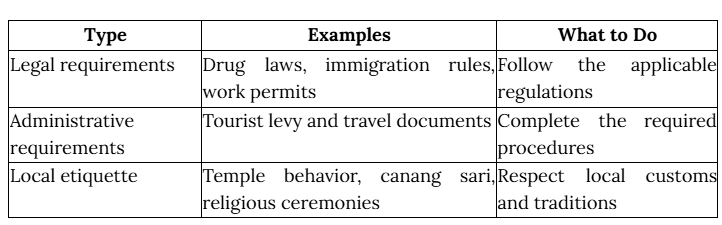
Not everything considered disrespectful in Bali is necessarily illegal. It is important to understand the difference between laws, administrative requirements, and local etiquette.
1. Do Not Use or Possess Illegal Drugs
Indonesia has strict laws prohibiting the use, possession, distribution, and trafficking of illegal drugs. Drug-related offenses can carry serious legal consequences.
Tourists should not use or carry illegal narcotics while visiting Bali.
2. Do Not Work Without the Proper Permission
Tourists cannot simply work in Bali while visiting on a tourist visa. Working in Indonesia requires the appropriate visa and work authorization.
This applies to paid work, professional activities, and other forms of employment that require official permission.
3. Follow Traffic Regulations
Tourists who drive in Bali must follow Indonesian traffic regulations. This includes having the required driving documents and following road safety rules.
If you rent a motorcycle or car, make sure you meet the legal requirements before driving.
4. Follow Immigration Rules
Foreign tourists must comply with Indonesian immigration regulations throughout their stay.
Check your visa conditions, permitted length of stay, and other requirements before traveling. Overstaying or violating immigration conditions can lead to administrative or legal consequences.
5. Pay the Bali Tourist Levy
Foreign tourists visiting Bali are required to pay the Bali Tourist Levy. The fee supports efforts related to Balinese culture, nature, and sustainable tourism.
Check the latest payment information before your trip, as administrative procedures can change.
6. Follow the Rules When Visiting Temples
Temples are important religious spaces in Bali, so visitors should follow the rules provided at each location.
Some temples may have specific requirements regarding clothing, access, photography, or areas that tourists cannot enter. Always follow signs and instructions from temple staff or local authorities.
7. Do Not Step on Canang Sari
Canang sari are daily offerings placed by Balinese Hindus in various places. Visitors should avoid stepping on or disturbing them.
If you accidentally step on one, move away respectfully and avoid disturbing the offering further.
8. Respect Religious Ceremonies and Processions
Religious ceremonies and processions are an important part of daily life in Bali. Visitors should avoid blocking processions, walking through ceremonies, or behaving disruptively while religious activities are taking place.
When taking photos, keep a respectful distance and follow local instructions.
9. Dress Respectfully at Sacred Places
Visitors should wear appropriate clothing when entering temples and other sacred areas. Some locations may require visitors to cover their shoulders and knees or wear a sarong.
Following these requirements is a simple way to show respect for Balinese religious traditions.
10. Understand the Rules During Nyepi
Nyepi, or the Balinese Day of Silence, is observed throughout Bali according to the Balinese Hindu calendar.
During Nyepi, there are restrictions on activities such as travel, entertainment, and outdoor activities.
Tourists should remain at their accommodation and follow the rules communicated by local authorities and hotel staff.
Understanding the Difference Between Laws and Local Etiquette
Understanding the difference between legal requirements and local etiquette can help tourists know how to behave appropriately in Bali.
Local etiquette is closely connected to how visitors interact with Balinese communities. Actions such as sitting, climbing, or posing on a pelinggih can be considered disrespectful.
Avoid behavior that may show a lack of tolerance or respect toward religious spaces and local traditions.
See Also: How to Get To Nusa Penida from Bali
Tips Before Traveling to Bali
Before your trip, check your visa and travel documents. If you plan to drive, make sure you have the required documents.
Bring suitable clothing for temple visits and check the Nyepi schedule. During your stay, respect sacred places, religious offerings, and traditional ceremonies.
If you are unsure about a rule, ask temple staff, a local guide, or your accommodation. Understanding laws, administrative requirements, and local etiquette can help you enjoy Bali while respecting its culture and communities.(*)
Frequently Asked Questions
What is illegal for tourists in Bali?
Tourists must follow Indonesian laws, including strict regulations on illegal drugs, immigration, employment, and driving. Visitors should also follow local rules when visiting temples and sacred places.
Can tourists use drugs in Bali?
No. The use, possession, distribution, and trafficking of illegal drugs are prohibited under Indonesian law. Drug-related offenses can carry serious legal consequences.
What should tourists avoid doing in Bali?
Tourists should avoid using illegal drugs, working without the required permission, violating immigration or traffic rules, and disrespecting religious places or ceremonies. Following local customs is also important when visiting Bali.