

What to Know About Eating Street Food in Bali Safely
What to know about eating street food in Bali is an important part of planning a culinary adventure on the island. From freshly grilled satay to crispy banana fritters, local food stalls offer affordable ways to experience Balinese cuisine.
Street food is not automatically unsafe. However, food handling, cooking temperatures, ingredient storage, and drinking water quality can affect your risk of foodborne illness. Knowing what to look for can help you enjoy local dishes while taking sensible precautions.
Is Street Food Safe to Eat in Bali?
Street food can be safe to eat when vendors follow proper food hygiene practices. However, conditions vary between stalls, so it is worth checking how food is prepared and stored.
Common risks include undercooked meat, contaminated utensils, unwashed hands, and ingredients left at unsafe temperatures. Food exposed to insects or handled with unclean equipment may also become contaminated.
Look for food stalls with clean preparation areas, properly stored ingredients, and well-maintained cooking utensils. Whether a stall is busy or quiet, pay attention to how the vendor handles food and keeps the surrounding area clean. These details can help you make a more informed choice.
How to Choose Street Food in Bali
A few simple checks can help you make more informed choices when eating at local stalls and markets.
Choose Freshly Cooked Food
Look for dishes cooked thoroughly and served hot. Satay grilled to order, freshly fried snacks, and hot bowls of bakso are practical options.
Be cautious with cooked food that has been sitting uncovered at room temperature for an extended period. Avoid meat, seafood, and eggs that appear undercooked.
Check the Vendor’s Hygiene
Observe whether the vendor uses clean utensils, handles money separately from ready-to-eat food, and keeps ingredients covered.
Food should be protected from dust, insects, and other potential sources of contamination. If the preparation area looks poorly maintained, consider choosing another stall.
Be Careful With Water and Ice
Avoid drinking untreated tap water in Bali. Choose sealed bottled water or water from a reliable purified source.
Ice can also be a concern if its source is uncertain. When ordering cold drinks, ask whether the ice is made from treated water. If you cannot confirm its safety, choose a sealed drink instead.
Wash your hands before eating or use hand sanitizer when soap and water are unavailable.
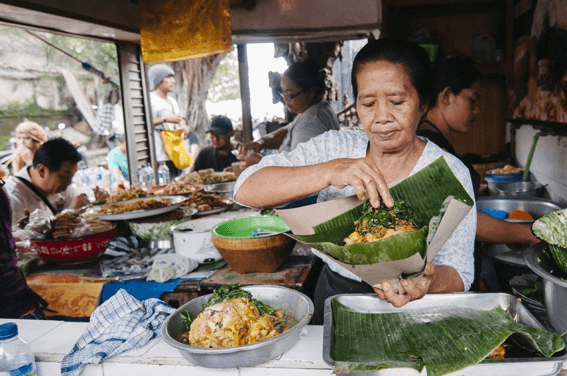
Popular Street Food to Try in Bali
Once you know what to look for, there are plenty of local dishes worth trying.
- Sate and Sate Lilit: Grilled meat skewers or minced fish mixed with coconut and Balinese spices. Choose freshly cooked portions served hot.
- Nasi Jinggo: A small serving of rice wrapped in banana leaves, commonly accompanied by shredded chicken, tempeh, and sambal. Check that the rice and side dishes are stored safely.
- Bakso: Meatballs served in a savory broth, often with noodles. Choose a vendor serving steaming-hot broth and thoroughly cooked ingredients.
- Pisang Goreng: Fried banana fritters with a crispy coating. Freshly fried portions are a popular snack, especially when served hot.
You can find these dishes at local warungs, small Indonesian eateries serving affordable meals, as well as street carts and traditional markets. Night markets are also worth exploring, but apply the same food safety checks wherever you eat.
What If You Get Sick After Eating Street Food?
Foodborne illness can cause diarrhea, nausea, vomiting, stomach cramps, and sometimes fever. Symptoms can develop within hours or take several days to appear, so the last meal you ate may not necessarily be the cause.
What Should You Do?
If you develop diarrhea or vomiting, prioritize replacing lost fluids. Drink safe water and consider oral rehydration solution (ORS), particularly if fluid loss continues.
Diarrhea and vomiting can cause fluid loss, which may lead to dehydration if fluids are not replaced. Learn more about the link between diarrhea, vomiting, and dehydration and the warning signs to watch for.
Eat according to your appetite and rest while monitoring your symptoms. Avoid preparing food for others while you are ill.
Seek medical attention if symptoms worsen or persist. Blood in your stool, severe abdominal pain, confusion, or signs of serious dehydration require urgent medical assessment. Young children, older adults, and people with underlying health conditions may need earlier medical advice.
Where to Get Medical Help in Bali
If you become unwell during your trip, contact a local clinic or healthcare provider for advice. Explain your symptoms, when they started, what you ate, and whether you have experienced vomiting, diarrhea, or fever.
Nusa Medica is one option to consider when looking for healthcare assistance in Bali. You can also read this guide to urgent care services in Bali to learn more about accessing medical care.
If you experience severe symptoms or signs of serious dehydration, seek urgent medical attention. For assistance contacting Nusa Medica, you can reach out via WhatsApp. Do not delay emergency care while waiting for a response.(*)
Frequently Asked Questions
Is street food safe to eat in Bali?
Street food can be safe when prepared and stored properly. Choose thoroughly cooked food served hot, check the vendor’s hygiene, and use safe drinking water.
How can I avoid Bali Belly when eating street food?
Reduce your risk by washing your hands, choosing freshly cooked meals, avoiding undercooked food, and drinking safe water. However, these precautions cannot eliminate every risk of infection.
What should I do if I get diarrhea after eating in Bali?
Replace lost fluids with safe water or oral rehydration solution. Seek medical advice if symptoms worsen, persist, or include concerning signs such as blood in your stool or severe dehydration.
Enjoy Bali’s Street Food With Confidence
Bali’s street food offers a simple way to explore local flavors and food traditions. By checking food preparation practices, choosing clean stalls, and drinking safe water, you can make more informed choices while exploring the island.
If you feel unwell during your trip, pay attention to your symptoms and seek medical advice when necessary. Knowing where to find healthcare support can also help you feel better prepared for your time in Bali.