
Bali Weather in November: Rainy Season Travel Guide

Bali Weather in November: Rainy Season Travel Guide

Bali weather in November marks the beginning of the rainy season. The island remains warm, but rainfall becomes more frequent as the dry season ends. If you are planning a trip, understanding the weather can help you prepare and enjoy your stay.

November is also a transition month. Some days may still be sunny, while others bring afternoon showers or heavier rainfall.

What Is the Weather Like in Bali in November?

November generally brings warm temperatures and higher humidity across Bali. Coastal areas such as Kuta, Seminyak, and Sanur usually experience daytime temperatures around 30–32°C.

At night, temperatures often drop to around 24–25°C. The sea also remains warm, making beach activities possible when weather conditions are suitable.

Rainfall becomes more frequent during this month. However, it does not necessarily rain throughout the day. Short showers may occur, followed by periods of sunshine.

Areas in central Bali, including Ubud, can experience more rainfall than some coastal destinations. The weather may also feel slightly cooler due to the surrounding greenery and higher elevation.


Bali weather in November, showing rainy conditions and a 27°C temperature on a smartphone weather forecast.


What Should You Pack for Bali in November?

A little preparation can make travelling during the rainy season more comfortable. Consider bringing these essentials:

1. A Lightweight Rain Jacket

Bring a compact rain jacket or poncho for sudden showers. It is especially useful when exploring outdoor attractions or travelling between destinations.

2. Comfortable Footwear

Choose sandals or shoes with good grip. Some pavements and outdoor paths can become slippery after rainfall.

3. Sunscreen and Insect Repellent

Cloudy weather does not eliminate UV exposure. Apply sunscreen during outdoor activities. Insect repellent is also useful, particularly during the rainy season.

4. Flexible Travel Plans

Avoid scheduling every outdoor activity back-to-back. Keep alternative indoor activities in mind in case heavy rain affects your plans.

5. Basic Travel Essentials

Pack personal medication, basic first-aid supplies, and a reusable water bottle. Staying hydrated is important in Bali’s warm and humid climate.


See Also: What to Know About Eating Street Food in Bali Safely


How Does November Weather Affect Travel in Bali?

Rain may temporarily affect outdoor activities, road conditions, and travel times. Some beaches may also experience changes in water conditions or marine debris, depending on wind and ocean currents.

You can still enjoy Bali in November. Consider visiting temples, museums, cafes, and indoor attractions when rain interrupts outdoor plans.

For more accurate daily updates, check the BMKG weather forecast before travelling. Weather conditions can vary between different parts of the island.


Staying Healthy During Bali’s Rainy Season

The rainy season can bring conditions that encourage mosquito breeding. Dengue fever is one health concern travellers should be aware of in Bali.

Use insect repellent, wear suitable clothing, and avoid leaving standing water around your accommodation. You can also learn more about preventing dengue fever in Bali.

If you develop a fever or feel unwell during your stay, seek medical advice. Avoid self-diagnosing symptoms, especially if they become persistent or worsen.

Knowing where to access urgent medical care in Bali can also help you feel more prepared.


Is November a Good Time to Visit Bali?

November can still be a good time to visit Bali if you are comfortable with occasional rain. The island remains warm, and many attractions continue to welcome visitors.

The key is to plan with some flexibility. Check local forecasts, bring suitable clothing, and adjust outdoor activities when needed. With the right preparation, you can still enjoy your Bali holiday during the rainy season.(*)



Healthcare in Sanur: Where to Find Medical Care 24/7

Healthcare in Sanur: Where to Find Medical Care 24/7


Sanur is a popular base for exploring Bali, with beaches, cafes, shops, and family-friendly attractions. Finding reliable healthcare in Sanur is also important, especially when you need medical attention during your stay.

From minor injuries to sudden fevers, medical needs can happen at any time. Fortunately, Sanur has several healthcare options, including clinics and hospitals. One option for general medical consultations is Nusa Medica Sanur, which operates 24 hours daily.

What Healthcare Options Are Available in Sanur?

Healthcare in Sanur includes general medical practices, clinics, and hospital services. The right place depends on your symptoms and the care you need. For common health concerns, a general practitioner may be a suitable first point of contact.

Sanur Medical Clinic is located along Jalan Bypass Ngurah Rai and operates 24 hours. Bali International Hospital is another option in the Sanur Special Economic Zone. It provides specialist services and has a 24-hour emergency department.

These facilities serve different needs, so consider the level of care required. A general practice can assess common complaints and advise whether further treatment is necessary. For severe symptoms or medical emergencies, contact emergency services or go to a hospital.


Nusa Medica Sanur Is Open 24 Hours

If you need a general doctor in central Sanur, Nusa Medica Sanur is worth knowing. From 1 November 2026, its operating hours changed to 24 hours daily.

Its address is Jalan Bypass Ngurah Rai No. 407, Sanur Kauh, South Denpasar. You can find it beside Fitness Plus and near Kopi Bali House. This central location can make it easier to reach from different parts of Sanur.

The practice welcomes local and international patients. Doctors and staff can communicate in Indonesian and English. This can help visitors explain their concerns and understand the next steps.

For directions, open Nusa Medica Sanur on Google Maps. Call 0818-1881-1911 or message the team through WhatsApp.


What Services Can You Access?

Nusa Medica Sanur provides general medical consultations based on each patient’s assessment. Services include wound care and treatment, vaccination, IV booster services, and online pharmacy services.

A doctor will first review your symptoms and medical needs. Appropriate care depends on the consultation and clinical assessment. If your condition requires specialist attention, the practice can refer you to a relevant specialist.

For its location and consultation details, see this guide to finding a doctor near me in Sanur, Bali.


Professional healthcare services and medical consultation in Sanur, Bali.


When Should You Visit a Doctor in Sanur?

Travel can bring changes to your routine, meals, sleep, and activity levels. You may experience fever, flu symptoms, stomach discomfort, dehydration, or minor cuts. If symptoms worry you or do not improve, seek medical advice.

For travel-related stomach problems, learn when to see a Bali belly doctor in Sanur. Ear discomfort after swimming or diving may also need attention. Visitors can explore ear care and ear wax removal in Sanur.

Do not wait for a routine clinic visit if you have severe symptoms. Chest pain, difficulty breathing, heavy bleeding, or loss of consciousness require urgent medical attention. Contact emergency services or visit a hospital emergency department.


See Also: Mount Rinjani Hiking Trails: Complete Guide to Every Route

Save These Healthcare Details Before Exploring Sanur

It is useful to save a clinic’s address and contact number before you need them. This can reduce stress when you are unwell or helping someone else. Keep your travel insurance details and relevant medical information accessible, too.

For Nusa Medica Sanur, remember these details:

  • Address: Jl. Bypass Ngurah Rai No. 407, Sanur Kauh, Denpasar Selatan, Bali 80228.
  • Landmarks: Beside Fitness Plus and near Kopi Bali House.
  • Operating hours: 24 hours daily, effective 1 November 2026.
  • Phone: 0818-1881-1911.
  • Languages: Indonesian and English.

Contact Nusa Medica Sanur before visiting to confirm the service you need. If you require specialist care or emergency treatment, ask about the appropriate next step. Having a local healthcare option in mind can make your Sanur stay feel more prepared and less stressful.(*)


What to Know About Eating Street Food in Bali Safely

What to Know About Eating Street Food in Bali Safely


What to know about eating street food in Bali is an important part of planning a culinary adventure on the island. From freshly grilled satay to crispy banana fritters, local food stalls offer affordable ways to experience Balinese cuisine.

Street food is not automatically unsafe. However, food handling, cooking temperatures, ingredient storage, and drinking water quality can affect your risk of foodborne illness. Knowing what to look for can help you enjoy local dishes while taking sensible precautions.


Is Street Food Safe to Eat in Bali?

Street food can be safe to eat when vendors follow proper food hygiene practices. However, conditions vary between stalls, so it is worth checking how food is prepared and stored.

Common risks include undercooked meat, contaminated utensils, unwashed hands, and ingredients left at unsafe temperatures. Food exposed to insects or handled with unclean equipment may also become contaminated.

Look for food stalls with clean preparation areas, properly stored ingredients, and well-maintained cooking utensils. Whether a stall is busy or quiet, pay attention to how the vendor handles food and keeps the surrounding area clean. These details can help you make a more informed choice.


How to Choose Street Food in Bali

A few simple checks can help you make more informed choices when eating at local stalls and markets.

Choose Freshly Cooked Food

Look for dishes cooked thoroughly and served hot. Satay grilled to order, freshly fried snacks, and hot bowls of bakso are practical options.

Be cautious with cooked food that has been sitting uncovered at room temperature for an extended period. Avoid meat, seafood, and eggs that appear undercooked.

Check the Vendor’s Hygiene

Observe whether the vendor uses clean utensils, handles money separately from ready-to-eat food, and keeps ingredients covered.

Food should be protected from dust, insects, and other potential sources of contamination. If the preparation area looks poorly maintained, consider choosing another stall.


Be Careful With Water and Ice

Avoid drinking untreated tap water in Bali. Choose sealed bottled water or water from a reliable purified source.

Ice can also be a concern if its source is uncertain. When ordering cold drinks, ask whether the ice is made from treated water. If you cannot confirm its safety, choose a sealed drink instead.

Wash your hands before eating or use hand sanitizer when soap and water are unavailable.


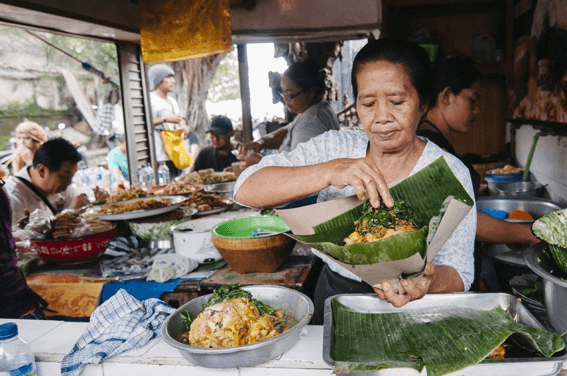
What to Know About Eating Street Food in Bali, featuring a local food vendor preparing traditional Balinese food at a street stall.

Popular Street Food to Try in Bali

Once you know what to look for, there are plenty of local dishes worth trying.

  • Sate and Sate Lilit: Grilled meat skewers or minced fish mixed with coconut and Balinese spices. Choose freshly cooked portions served hot.
  • Nasi Jinggo: A small serving of rice wrapped in banana leaves, commonly accompanied by shredded chicken, tempeh, and sambal. Check that the rice and side dishes are stored safely.
  • Bakso: Meatballs served in a savory broth, often with noodles. Choose a vendor serving steaming-hot broth and thoroughly cooked ingredients.
  • Pisang Goreng: Fried banana fritters with a crispy coating. Freshly fried portions are a popular snack, especially when served hot.

You can find these dishes at local warungs, small Indonesian eateries serving affordable meals, as well as street carts and traditional markets. Night markets are also worth exploring, but apply the same food safety checks wherever you eat.


What If You Get Sick After Eating Street Food?

Foodborne illness can cause diarrhea, nausea, vomiting, stomach cramps, and sometimes fever. Symptoms can develop within hours or take several days to appear, so the last meal you ate may not necessarily be the cause.

What Should You Do?

If you develop diarrhea or vomiting, prioritize replacing lost fluids. Drink safe water and consider oral rehydration solution (ORS), particularly if fluid loss continues.

Diarrhea and vomiting can cause fluid loss, which may lead to dehydration if fluids are not replaced. Learn more about the link between diarrhea, vomiting, and dehydration and the warning signs to watch for.

Eat according to your appetite and rest while monitoring your symptoms. Avoid preparing food for others while you are ill.

Seek medical attention if symptoms worsen or persist. Blood in your stool, severe abdominal pain, confusion, or signs of serious dehydration require urgent medical assessment. Young children, older adults, and people with underlying health conditions may need earlier medical advice.


Where to Get Medical Help in Bali

If you become unwell during your trip, contact a local clinic or healthcare provider for advice. Explain your symptoms, when they started, what you ate, and whether you have experienced vomiting, diarrhea, or fever.

Nusa Medica is one option to consider when looking for healthcare assistance in Bali. You can also read this guide to urgent care services in Bali to learn more about accessing medical care.

If you experience severe symptoms or signs of serious dehydration, seek urgent medical attention. For assistance contacting Nusa Medica, you can reach out via WhatsApp. Do not delay emergency care while waiting for a response.(*)


Frequently Asked Questions

Is street food safe to eat in Bali?

Street food can be safe when prepared and stored properly. Choose thoroughly cooked food served hot, check the vendor’s hygiene, and use safe drinking water.

How can I avoid Bali Belly when eating street food?

Reduce your risk by washing your hands, choosing freshly cooked meals, avoiding undercooked food, and drinking safe water. However, these precautions cannot eliminate every risk of infection.

What should I do if I get diarrhea after eating in Bali?

Replace lost fluids with safe water or oral rehydration solution. Seek medical advice if symptoms worsen, persist, or include concerning signs such as blood in your stool or severe dehydration.

Enjoy Bali’s Street Food With Confidence

Bali’s street food offers a simple way to explore local flavors and food traditions. By checking food preparation practices, choosing clean stalls, and drinking safe water, you can make more informed choices while exploring the island.

If you feel unwell during your trip, pay attention to your symptoms and seek medical advice when necessary. Knowing where to find healthcare support can also help you feel better prepared for your time in Bali.